Back to Hazrat Abu Bakr as-Siddiq (ra)
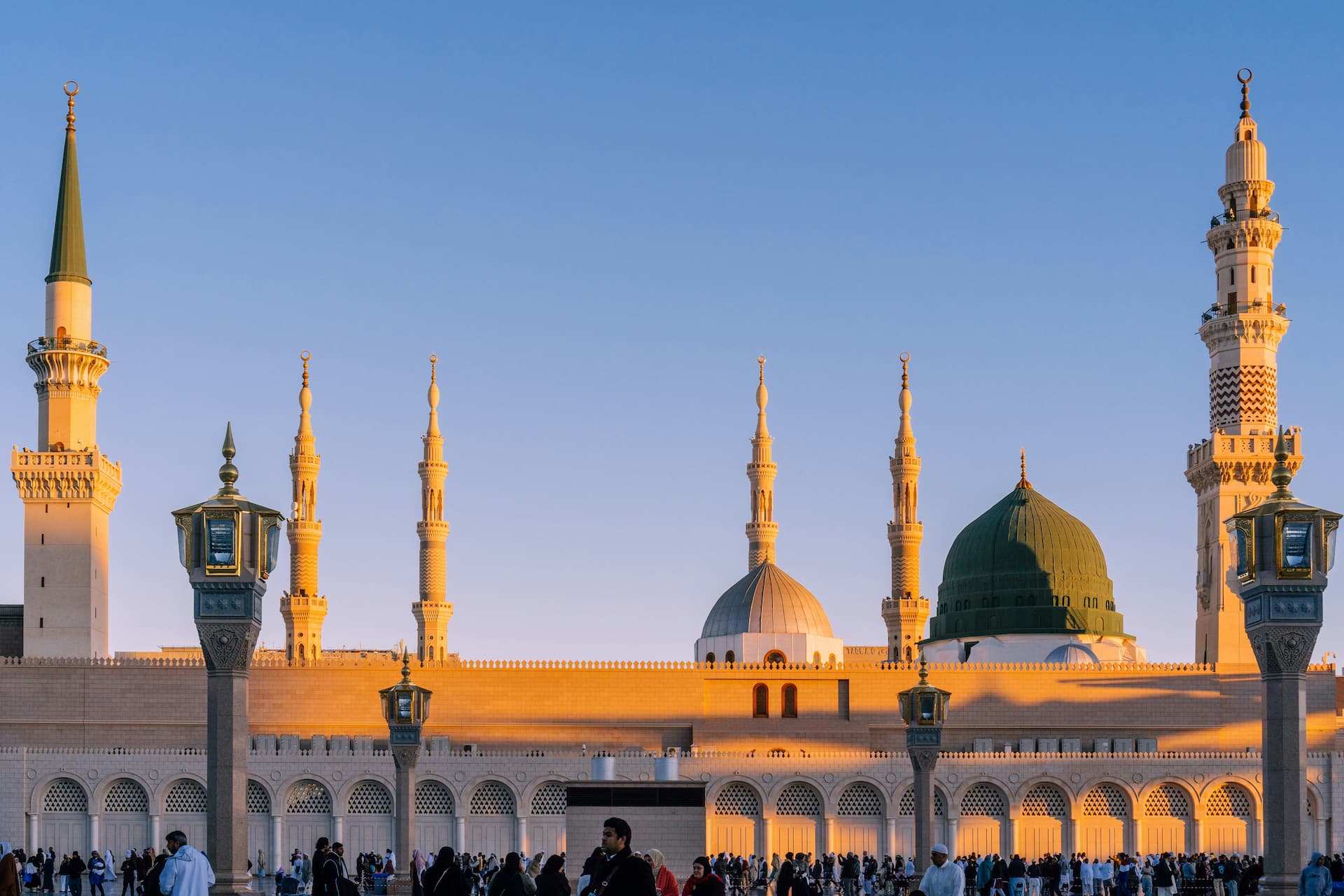
Migration to Medina (Hazrat Musleh Mau’d’s (ra) Narration)
From the life of Hazrat Abu Bakr as-Siddiq (ra)
From the life of Hazrat Abu Bakr as-Siddiq (ra)
Whilst mentioning these details, Hazrat Musleh-e-Maud (ra) states:
“The companions of the Holy Prophet (sa) had begun preparations to migrate. One family after another would begin to disappear from Mecca. Now, even those who were awaiting the sovereignty of God Almighty became even more bold [that God’s help was near], and at times, the houses of an entire street of Mecca would be locked at night, and come the morning, when the people of the city would find it to be very quiet, upon enquiry, they would learn that all the residents on the street had migrated to Medina. This deep impact of Islam which had been growing from within Mecca, had left the Meccans astonished. Eventually, Mecca had been vacated by the Muslims, and aside from a few slaves, only the Holy Prophet (sa), Hazrat Abu Bakr (ra) and Hazrat Ali (ra) had remained in Mecca.”
(Dibacha Tafsir-ul-Quran, Anwar-ul-Ulum, Vol. 20, p. 222)
Hazrat Musleh-e-Maud (ra) further says:
“The idolaters of Mecca naturally harboured greater malice and enmity for the Holy Prophet (sa) than for anyone else because they witnessed with their own eyes that as a result of his teachings, opposition to idol-worship was continuing to spread. They believed that if they assassinated him, the rest of his community would automatically fall apart. For this reason, they would persecute the Holy Prophet (sa) more than anyone else and hoped that one way or another, he would desist from his claims. In spite of all these difficulties, the Holy Prophet (sa) instructed his companions to migrate, but continued to suffer these trials and difficulties himself, and did not migrate from Mecca, as he had not yet received permission from Allah Almighty to do so. Hence, when Hazrat Abu Bakr (ra) asked if he should undertake the migration, the Holy Prophet (sa) replied:
عَلٰي رِسْلِكَ فَاِنِّيْ اَرْجُو اَنْ يُّؤْذَنَ لِيْ
“‘Wait, for I hope that I too shall be granted permission.’”
(Sirat-ul-Nabi, Anwar-ul-Ulum, Vol. 1, p. 489)
The disbelievers [of Mecca] convened in Dar al-Nadwah to secretly plot against the Holy Prophet (sa). Regarding this, it is recorded that the chieftains of Mecca were enraged and agitated that the Muslims were slipping out of their hands to safety. For this reason, they gathered in Dar al-Nadwah.
Allama Ibn Ishaq writes:
“When the Quraish observed that a group of supporters had joined the Holy Prophet (sa) who were neither from the Muslims of Mecca, nor did they belong to their region, and that other companions of the Holy Prophet (sa) were migrating towards those people, the Quraish realised that the Muslims had found safety with him, and that they, i.e. the people of Medina had given them refuge. They became concerned that the Holy Prophet (sa) would migrate to them, and that they would then gather against them for war. Therefore, they convened in Dar al-Nadwah to deliberate upon the matter. This was the house of Qusay bin Kilab that was reserved for when the Quraish needed to deliberate upon a decision. Whenever they felt danger from the Holy Prophet (sa), they would gather in this place for consultation.”
In another narration, it is related by Hazrat Abdullah bin Abbas (ra), “When the Quraish decided to gather, they pledged that they would convene in Dar al-Nadwah and consult with each other about the Holy Prophet (sa). The day which they had pledged to convene is known as Yaum al-Zahmah. Iblis [i.e. the devil] manifested before them in the appearance of an old man” – what is meant by this is that a man came before them who possessed the attributes of Iblis. “He was wrapped in a cloak and was standing at the door of Dar al-Nadwah. The people did not recognise him. When they saw this old man standing at the door, they asked, ‘Who is this old man?’ He replied, ‘I am an old man from among the people of Najd, and I have heard what you people have pledged to do. I have come to hear what you have to say. Perhaps you will find a useful suggestion or something of benefit.’” This is what he said regarding himself.
“The people agreed and allowed him to enter. He entered along with all the others. The gathering consisted of a large party of chieftains of the Quraish, including prominent names like Utbah bin Rabiah, Shayba bin Rabiah, Abu Sufyan bin Harb, Tuaima bin Adi, and others like Abu Jahl [Amr] bin Hisham, the two sons of Hajjaj and many others. There were also some chieftains who were not from among the Quraish.
“When everyone had gathered and it came time to present suggestions, one person suggested that he (Muhammad (sa)) should be imprisoned and locked up behind iron bars. Then, they would wait for his death, just as they did with two poets; the likes of Zuhair and Nabigha and other poets that had passed.” In other words, wait for his demise, just as they did with two poets, Zuhair and Nabigha, before him. This was planned for the Holy Prophet (sa) as well, i.e. to wait for his demise as was done before to others.
“Upon hearing this suggestion, the old man from Najd said, ‘No. I swear by Allah, according to me, this suggestion is not appropriate. By Allah, if you people imprison him, this news will reach his companions even from behind closed doors. Then, it is likely that they will launch a sudden assault on you and free him from your custody. Following that, they will increase their numbers with his help and defeat you. Thus, you must think of another strategy.’ Upon this, another person suggested, ‘We should exile him from our city, after which we will not associate with him and will not be concerned about where he goes. When he leaves us and we rid ourselves of him, then our circumstances will improve and we will be able to live in the same condition as we once did.’
“To this, the old man from Najd remarked, ‘No. I swear by Allah that this suggestion is not appropriate. Do you not see how great his message and how pleasant his speech is? He is able to win the hearts of the people with what he has brought. I swear by Allah that if you adopt this strategy, you will not live in peace, because he will go unto another Arab tribe and win their hearts with his words. They will become his followers and join forces with him against you. They will then advance toward you, disgrace you in your own city, seize control of your matters from your own hands and treat you however they like. Thus, you must think of another strategy.’
“In response, Abu Jahl said, ‘My suggestion is that a young and strong individual of status and lineage from each tribe should be chosen. Each of them should be handed a sharp sword. They all should go to him and attack him as one force and kill him. Thereby, we will finally be free from him. By killing him in this manner, his blood would be on all the tribes, and the tribe of Banu Abd Manaf would not be able to combat against all the tribes for retribution. Accordingly, they will settle for blood money, and we will pay them the amount due.’
“The old man from Najd replied, ‘If there is a viable suggestion, then it is the suggestion of this man. All the other suggestions are futile. Thus, everyone agreed with this suggestion and left.’”
(Al-Sirat Al-Nabawiyyah, ibn Hisham, pp. 340-342, Dikr Hijrat-e-Rasool, Dar-ul-Kutub al-Ilmiyyah, Beirut, 2001)
On the other hand, Allah the Almighty informed the Holy Prophet (sa) about all of this, as Allah states:
وَاِذْ يَمْكُرُ بِكَ الَّذِيْنَ كَفَرُوْا لِيُثْبِتُوْكَ اَوْ يَقْتُلُوْكَ اَوْ يُخْرِجُوْكَ وَ يَمْكُرُوْنَ وَ يَمْكُرُ اللّٰهُ وَ اللّٰهُ خَيْرُ الْمٰكِرِيْنَ
“And [remember the time] when the disbelievers plotted against thee that they might imprison thee or kill thee or expel thee. And they planned and Allah [also] planned, and Allah is the best of planners.” (Surah al-Anfal, Ch.8: V.31)
Along with this, Angel Gabriel informed the Holy Prophet (sa) of his permission to migrate.
(Subul al-Huda wa al-Rishad, Vol. 3, p. 232, Dar-ul-Kutub al-Ilmiyyah, Beirut, 1993)